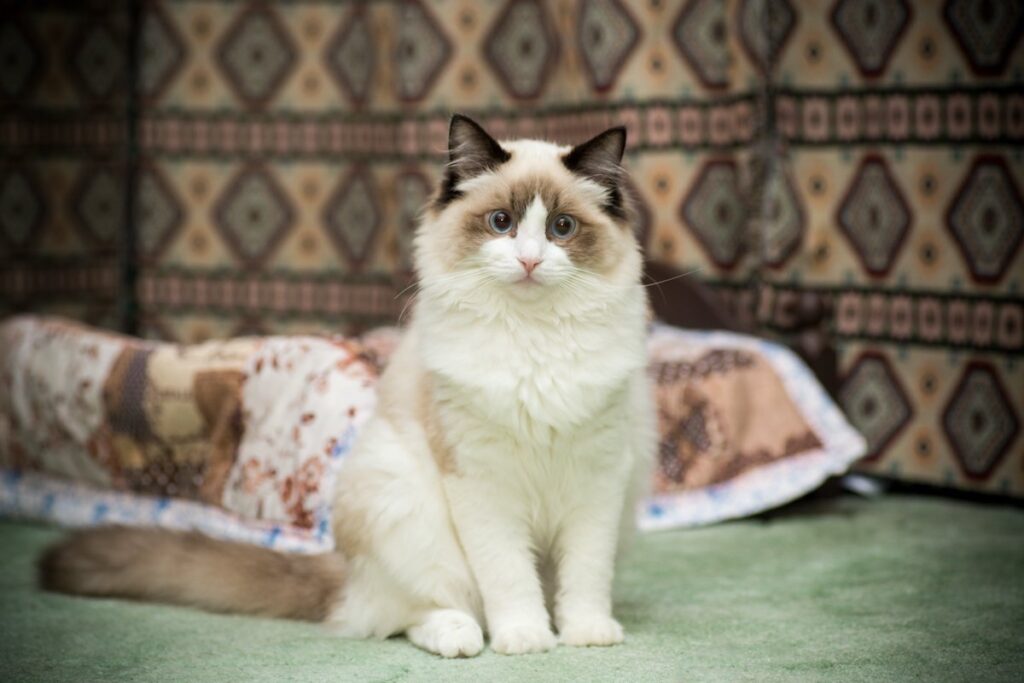
Young healthy beautiful purebred Ragdoll cat, at home
Cats have been known for their independent nature, unique behavior, and playful personalities. They are one of the most popular pets around the world, with an estimated population of over 600 million. However, have you ever wondered how cats became domesticated and why they are such an important part of our lives? In this article, we will take a closer look at the history of cats and how they became domesticated.
Introduction
Cats are believed to be one of the oldest domesticated animals in the world, with evidence of their domestication dating back to ancient Egypt. The relationship between humans and cats has been a long and complex one, with cats being revered as gods in some cultures and being persecuted as witches’ companions in others.
The Wild Ancestors of Domestic Cats
Cats are members of the Felidae family, which includes wild cats such as tigers, lions, and leopards. The ancestor of the domestic cat is the African wildcat (Felis silvestris lybica), a small wild cat found in North Africa and the Near East. This wildcat is similar in appearance to the domestic cat, with short hair and a spotted coat. Over time, this wildcat evolved into different breeds of domesticated cats that we see today.
Early Domestication of Cats
The domestication of cats likely began around 10,000 years ago in the Near East. Cats were attracted to human settlements because of the presence of rodents, which were a source of food. Humans also began to realize the benefits of having cats around to control rodent populations. Cats were also valued for their ability to hunt and kill snakes, scorpions, and other pests.
Cats in Ancient Egypt
One of the most well-known civilizations that revered cats was ancient Egypt. Cats were worshiped as gods and were believed to have special powers. The Egyptian goddess Bastet was often depicted with the head of a cat, and many Egyptian households had pet cats. Cats were so highly valued that they were often mummified and buried with their owners.
Cats in Europe
Cats were also valued in ancient Greece and Rome, where they were kept as pets and used to control rodent populations. However, during the Middle Ages, cats were often associated with witchcraft and were persecuted along with their owners. This led to a decline in the cat population in Europe, which in turn led to an increase in the rodent population and the spread of diseases such as the bubonic plague.
The Modern Domestic Cat
Today, cats are one of the most popular pets in the world. They come in a wide variety of breeds, from the hairless Sphynx to the fluffy Persian. Cats are valued for their companionship, their ability to control rodent populations, and their playful personalities. They are also used in therapy to help reduce stress and anxiety.
Conclusion
The domestication of cats is a long and complex process that began thousands of years ago. Cats were initially attracted to human settlements because of the presence of rodents, and humans quickly realized the benefits of having cats around. Over time, cats became valued members of society, revered as gods in some cultures and persecuted in others. Today, cats are an important part of our lives, providing us with companionship, entertainment, and pest control.
FAQs
- When were cats first domesticated?
Cats were first domesticated around 10,000 years ago in the Near East.
- What is the ancestor of the domestic cat?
The African wildcat is the ancestor of the domestic cat.
- Why were cats valued in ancient Egypt?
Cats were valued in ancient Egypt because they were believed to have special powers and were worshiped as gods.



Leave a Comment